
The policy is not the practice.
Every HR team runs on rules that are not in any document: how the review calendar is really dated, which exception is always granted, what a job-code reference means in this company. An assistant that reads only the documents will be fluent and wrong. Here is how we write the practice down.
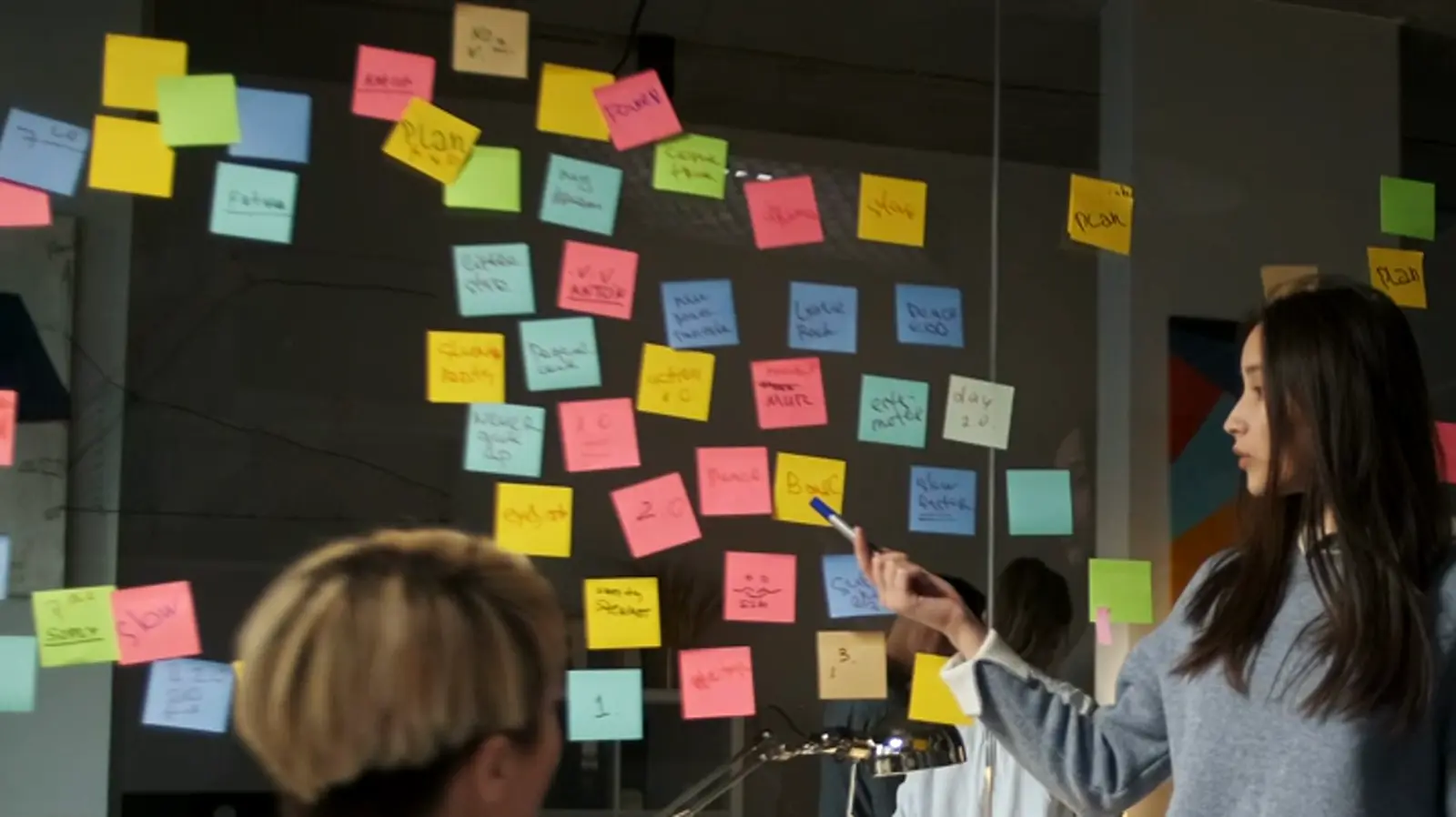
Ask an HR system for last year's performance ratings and it will give you a set of forms. Which year a form belongs to depends on how the organisation dates its review campaign: by the year the form was launched, the year it closed, or the year it assessed. Three HR teams in three companies will answer differently, all correctly, and none of them will have written the rule down. It is simply how things are done here.
Put an assistant in front of that question and it will pick one of the three and say nothing about the choice. The answer will be fluent, sourced to the right forms, and wrong for two companies out of three.
Where practice lives
After enough HR system programmes, the places where practice diverges from the record are familiar. They are rarely dramatic, and they decide answers every day.
- Vocabulary. The company calls its HR system by a nickname, writes job-framework references in its own notation, and uses “site” to mean something the org structure calls a cost centre.
- Calendars. The review cycle, the bonus year, the headcount freeze date and the payroll cut-off each have a house convention.
- Exceptions. The policy says one thing; a country, a plant or a legacy entity does another, usually for a reason that was good at the time.
- Thresholds. “Long vacancy”, “critical role” and “high absence” each have a number, and the number is in someone's head.
- Trust in fields. Everyone knows which field in the system is stale, which custom field replaced it, and which report to never believe.
Tacit to explicit is a conversation, not an export
Nonaka's 1994 model gave the move from tacit to explicit knowledge a name, externalisation, and insisted that it happens between people, through dialogue and shared practice, not through a document request. Polanyi's older line still holds: people know more than they can tell, and they tell it most readily when asked a concrete question about a concrete case.
A June 2026 paper extended Nonaka's spiral to include what it called tacit machine knowledge: the patterns an AI system picks up that nobody wrote down either. That cuts both ways. An assistant that has read a thousand forms may have learned the house convention without being told, and may apply it silently. Silent rules are the problem, whoever holds them.
How we write the practice down
Before any assistant answers a question in a new organisation, we run what we call a house-style pass. It is a structured interview with the people who run the HR system and the people who use its outputs, organised around the questions managers actually ask. For each one: what does the answer depend on, where does the practice differ from the document, and why.
The result is a short set of rules, each with four properties.
- Stated in the company's own words, so that a colleague recognises it.
- Attributed: who agreed it, and on what date.
- Reasoned: why the rule exists, so that it can be retired when the reason no longer holds.
- Testable: an example question where applying the rule changes the answer.
Those rules travel with the assistant. When it reads a year's ratings, it applies the house calendar and says so. When it counts long vacancies, it uses the company's threshold and shows it. When a rule is wrong, someone can see it, challenge it and change it, with the old version kept.
What this is not
It is not a knowledge base in the old sense, a wiki nobody updates. It is a small, versioned list of the rules that change answers, maintained by the people who own them, and read by the assistant at the moment it answers. The test of whether it is working is simple: ask the assistant the three questions where your organisation differs from the textbook, and read what it says.
Sources
More notes
- № 19Skills became infrastructure. Judgement didn't.In October 2026 the two largest HR suites moved skills and task data into the core of their platforms. Inferred skills are now a commodity. The evidence says the bottleneck was never the taxonomy; it was what anyone did with it.Perspective4 min read
- № 17“Potential” is where the promotion gap hides.In a study of 29,809 management-track employees, women were rated 8.3% lower on potential despite higher performance ratings, and were 14% less likely to be promoted. Their lower potential ratings did not predict their future performance. Every HR system has the two columns needed to check this.Research3 min read
- № 16Works councils and robots: the evidence the pilot needs.German plants with works councils kept more of their workers through robot adoption, trained more of them, and did not adopt more slowly. Finland's mandate raised productivity. For an AI rollout that starts with the works council, the numbers are now on the employer's side.Research3 min read




See PeopleHub on one of your own workflows.
Forty-five minutes, and a clear account of what PeopleHub can and cannot do for it.
Book a working session